

 See My Latest Article on HelloNation
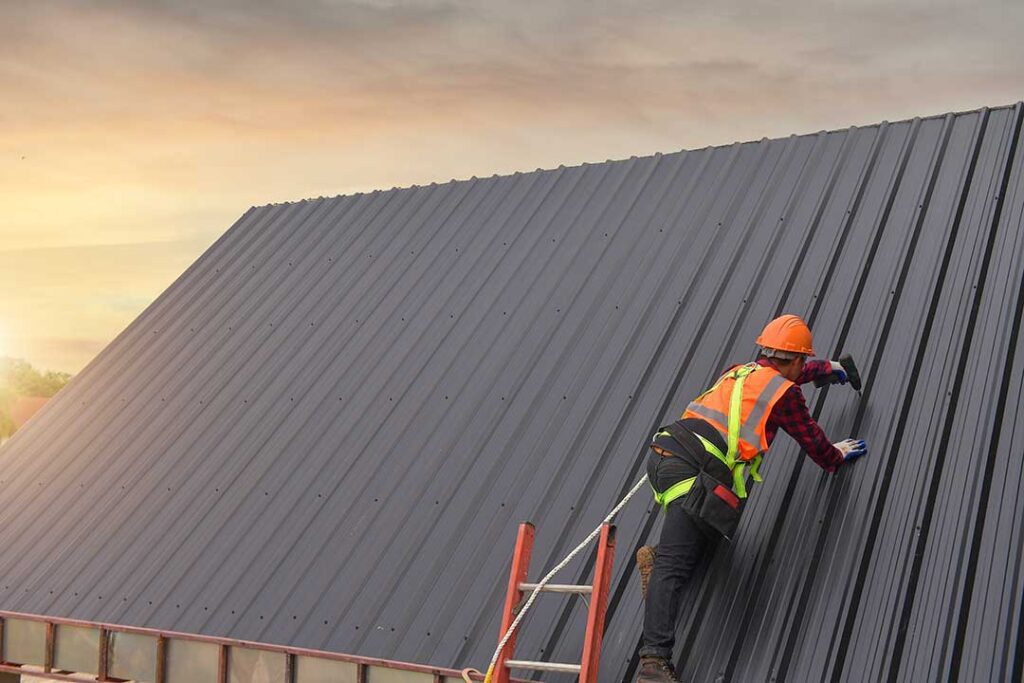
Why roof drainage deserves attention in Brattleboro, VT
Good roof drainage moves water away from the roof surface, exterior walls, foundation, walkways, and nearby landscaping before it can cause damage. In Brattleboro, changing seasons make this especially important: heavy rain, wet snow, freeze-thaw cycles, falling leaves, and ice can all affect how reliably water leaves a building.
A drainage system includes more than gutters. It also involves roof slope, flashing, valleys, gutters, downspouts, extensions, drainage paths, and the grading around the foundation. A problem in any one part can create leaks or moisture damage elsewhere.
How should roof water be directed?
Roof water should flow continuously from the roof surface into a gutter or other collection system, then through downspouts and away from the foundation. The discharge point should not leave water beside the building or allow it to pool against basement walls.
A functional drainage path usually includes:
- Clear roof valleys and properly sealed valley edges
- Secure gutters with a consistent slope toward downspouts
- Downspouts large enough for the roof area they serve
- Elbows and extensions that carry water well away from the foundation
- Soil grading that slopes away from the building
- Splash control where concentrated water reaches the ground
Water should not be allowed to run behind gutters, overflow at corners, or discharge directly onto a lower roof section without proper protection. These conditions can damage roof edges, siding, trim, masonry, and foundation walls.
What gutter practices work best?
Gutters should be installed with enough pitch to move water without appearing sharply tilted. A gutter that is nearly level may hold water, while one with excessive pitch may look uneven and drain poorly at one end.
Fasteners should be spaced closely enough to support the gutter during rain, snow, and ice buildup. Older gutters may sag because of loose fasteners, rotted fascia, or repeated winter loading. Simply adding a new screw may not solve the underlying problem if the wood behind the gutter has deteriorated.
Gutter sections and end caps should be checked for separation. Seams that leak can wet fascia boards and exterior walls even when the gutter itself appears clean. Corners deserve particular attention because they often receive a large volume of water from two roof planes.
Leaf screens can reduce maintenance, but they do not make a drainage system maintenance-free. Small roof grit, seeds, needles, and ice can still obstruct water movement. Any cover should be compatible with the existing gutter and easy to inspect.
How far should downspouts discharge water?
Downspouts should release water far enough from the foundation that it does not flow back toward the building. The exact distance depends on soil, slope, roof size, nearby surfaces, and whether the property has a basement or crawl space.
A downspout extension should:
- Remain connected during freezing weather
- Discharge onto stable ground rather than eroding soil
- Avoid directing water toward a neighboring property or walkway
- Stay clear of basement window wells and foundation cracks
- Be positioned so snow removal and normal yard use are not obstructed
Short extensions that end immediately beside the foundation are a common drainage mistake. Water may disappear from view while still saturating the soil next to the foundation. In areas with clay-rich or compacted soil, that moisture may drain slowly and increase pressure on basement walls.
Underground downspout drains can work well when they have a suitable outlet and can be inspected or cleared. A buried pipe with no visible discharge point may become difficult to maintain and can send water toward the foundation if it becomes clogged or damaged.
How do snow and ice affect roof drainage?
Snow and ice can block gutters and downspouts, create overflow, and add weight to roof edges. Freeze-thaw conditions may also cause water trapped in a gutter or roof valley to expand and move beneath roofing materials.
Ice dams form when heat escapes through the upper part of a roof and melts snow above a colder eave. The resulting water can collect behind the ice and enter beneath shingles or other roof coverings. Gutters do not usually cause ice dams, although clogged or poorly positioned gutters can make drainage worse.
The most useful long-term measures are related to the building enclosure:
- Adequate attic insulation
- Air sealing around ceiling penetrations
- Proper attic ventilation where the roof design allows it
- Clear roof valleys and eaves
- Careful management of snow and ice loads

Roof-edge heating cables may help in limited situations, but they are not a substitute for correcting heat loss, poor ventilation, or inadequate flashing. They also require safe installation and regular inspection.
What roof areas need extra attention?
Roof valleys, dormers, porches, additions, and lower roof sections often receive concentrated water. A small roof that drains onto a larger lower roof can discharge a powerful stream over a narrow area. Without suitable flashing or a durable drainage detail, the lower roof may wear faster than the surrounding surfaces.
Dormers and roof-to-wall intersections should be checked for damaged step flashing, open seams, and gaps in counterflashing. Chimneys and skylights also require careful flashing because they interrupt the normal flow of water.
Porches and additions may have shallow slopes that drain slowly. They can collect leaves, snow, and debris more easily than steep roof planes. A drainage design that works on the main roof may not be adequate for a low-slope section.
How often should a roof drainage system be inspected?
A practical schedule is to inspect drainage before the heavier rainfall of spring and again after leaves have fallen in autumn. Additional checks are sensible after major storms, prolonged freezing weather, or tree damage.
From the ground, look for:
- Sagging or detached gutters
- Water stains below eaves
- Overflow marks at corners
- Downspouts that are disconnected
- Soil erosion below discharge points
- Moss or algae linked to persistent dampness
- Basement dampness near foundation walls
- Shingles or flashing displaced by snow or wind
A roof inspection should not involve walking on wet, icy, or steep surfaces. Ladders, roof edges, and unstable snow present serious fall hazards. Safety concerns, suspected structural damage, electrical hazards, or water entering living spaces justify qualified assistance rather than improvised repairs.
Can landscaping improve drainage?
Yes. Roof drainage and site drainage work together. Soil should generally slope away from the foundation, and planting beds should not create a basin that holds water against the building. Mulch can reduce erosion, but it should not be piled against siding or cover the bottom edge of exterior cladding.
Downspout discharge should be coordinated with paths, driveways, retaining walls, and neighboring grades. Water that is safely dispersed in one part of a property may become a problem if it freezes on a walkway or flows toward a lower foundation wall.
Keeping shrubs, vines, and tree branches from obstructing gutters and roof edges also improves inspection access. Vegetation that touches roofing can retain moisture and make it harder to identify damaged flashing or blocked valleys.
What is the most useful drainage priority?
The first priority is continuous water movement: roof to gutter, gutter to downspout, downspout away from the foundation, and surface water away from the building. Clearing debris helps, but drainage problems often involve slope, flashing, grading, attachment, or runoff volume rather than simple dirt.
For area households, the most effective routine is to observe the system during and after rain, inspect it before winter, and correct small leaks or discharge problems before repeated wetting and freezing cause larger damage.